


SKU: MDTD
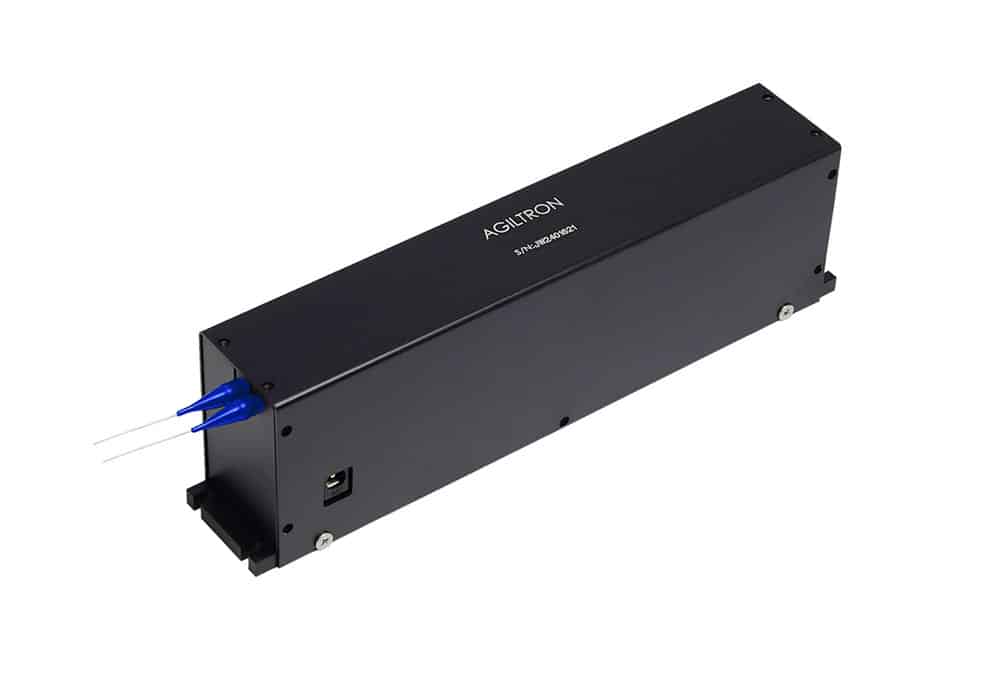
The MDTD Series Variable Optical Time Delay is a compact, plug-and-play system designed to provide precise, reliable, and continuously adjustable optical delay. It incorporates a highly stable motorized translation stage with an innovative backlash-prevention mechanism and proprietary optical encoders, delivering submicron positioning repeatability, a wide delay range, low insertion loss, and high adjustment speed. The system supports a broad range of wavelengths and fiber types, including single-mode (SM), multimode (MM), and polarization-maintaining (PM) fibers. The optical design consists of two specially engineered, low-loss fiber collimators. Light from the input fiber is collimated into free space, reflected by a movable retroreflector, and coupled back into the output fiber. Optical delay is precisely adjusted by changing the free-space optical path length through movement of the retroreflector. A precision stepper motor with adjustable speed provides accurate and repeatable positioning. The MDTD Series features an integrated, all-in-one design with built-in motor-driving electronics, eliminating the need for an external controller. The unit can be conveniently operated from a computer through a Micro-B USB or RS-232 interface. User-friendly graphical control software is provided for intuitive adjustment, monitoring, and operation. The minimum static delay is determined by the physical length of the fiber pigtails, while the minimum adjustable delay increment is determined by the translation stage resolution. The residual delay associated with the internal fiber path corresponds to approximately 0.1 m of fiber. Customized fiber lengths and tighter length tolerances are available upon request, with additional charges depending on the specified length and precision requirements. For applications requiring an extended delay range, multiple shorter-delay MDTD units can be connected in series. This modular configuration helps maintain more uniform insertion loss across the adjustment range while limiting the additional optical loss associated with achieving long delays. Multiple units can be operated through a daisy-chain control architecture and managed using a unified graphical user interface (GUI), enabling convenient, synchronized control of the complete delay system.

