
Fiber Collimators
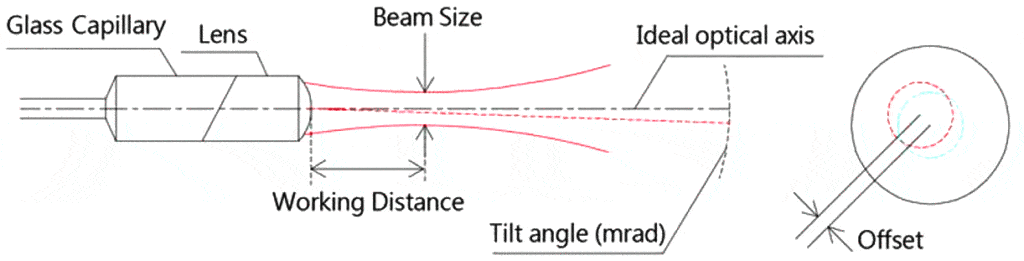
Fiber collimators are precision components designed to transform divergent light from an optical fiber into a parallel (collimated) beam. In practice, “perfect” collimation is limited by fundamental diffraction. The beam’s performance is governed by two primary parameters: 1) Beam Divergence. The divergence angle, represents the gradual spreading of the beam as it propagates. It follows θ≈λ/πD for a gaussian beam. 2) Rayleigh Range. The distance a beam can travel before it begins to spread significantly is defined by the Rayleigh Range. For a Gaussian beam, this is calculated as πD²/4 λ . Consequently, larger beam diameters result in lower divergence, enabling significantly longer working distances. Our practical collimators are meticulously optimized to maintain a diffraction-limited beam size across a specified operating range in which we require both beam size and working distance specifications. For multimode applications, performance is further influenced by the specific mode field distribution. To ensure our products meet exact customer expectations, we use laser sources with matching profiles during both fabrication and rigorous testing. With over 20 years of industry leadership, we leverage proprietary technologies — including unique fiber-end lensing, precision V-groove assembly, and custom-built metrology instruments — to manufacture bespoke fiber collimators that deliver industry-leading optical performance.
-
 This product has multiple variants. The options may be chosen on the product page
Fiber Tip Micro Collimator (OCT) Distance < 3 mm
$136+
SKU: FLES
Price range: $136 through $320 -
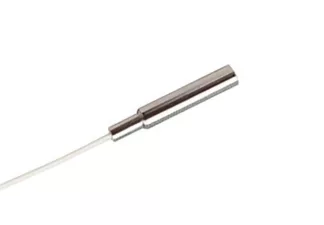 This product has multiple variants. The options may be chosen on the product page
Fiber Mini Collimator Distance 1 to 80 mm
Diameter 1.2 mm–3.2 mm, SM, PM, 5 W, 10 W
$50+
SKU: FCOM
$50 -
This product has multiple variants. The options may be chosen on the product page
Fiber Compact Collimator Distance up to 1.2 m
Diameter 6.1 mm, SM, PM, 5 W, 10 W
$230+
SKU: FCCM
$230 -
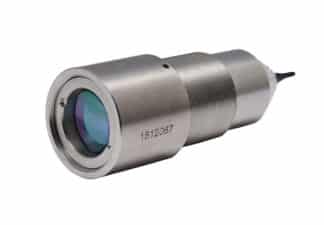 This product has multiple variants. The options may be chosen on the product page
High Power Fiber Collimator Long Distance to 100 m
1 kW CW, SM, LMA, DCD, PM fibers
$706+
SKU: FCHP
$706 -
This product has multiple variants. The options may be chosen on the product page
Optical Fiber End Cap
$50+
SKU: FECA
Price range: $50 through $120 -
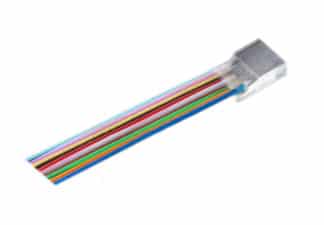 This product has multiple variants. The options may be chosen on the product page
V-Groove Fiber Array
SM, PM, MM
$12+
SKU: PMVG
Price range: $12 through $1,682 -
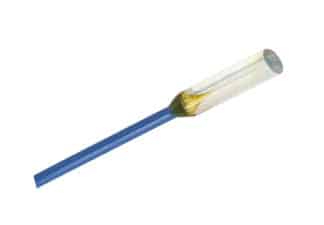 This product has multiple variants. The options may be chosen on the product page
Fiber Collimators/Pigtails
400–2500 nm, SM, PM, 10 W, PER 28
$11+
SKU: FPIG
$11